Over a million people lived and worked at Camp Lejeune from 1953 to 1987. Tens of thousands of them have died or are suffering.
During the years 1953-1987, water supplies at Camp Lejeune (North Carolina) were found to be contaminated with a number of hazardous chemicals linked to a range of serious health conditions, including cancer, birth defects, ALS, and other potentially life-threatening injuries.
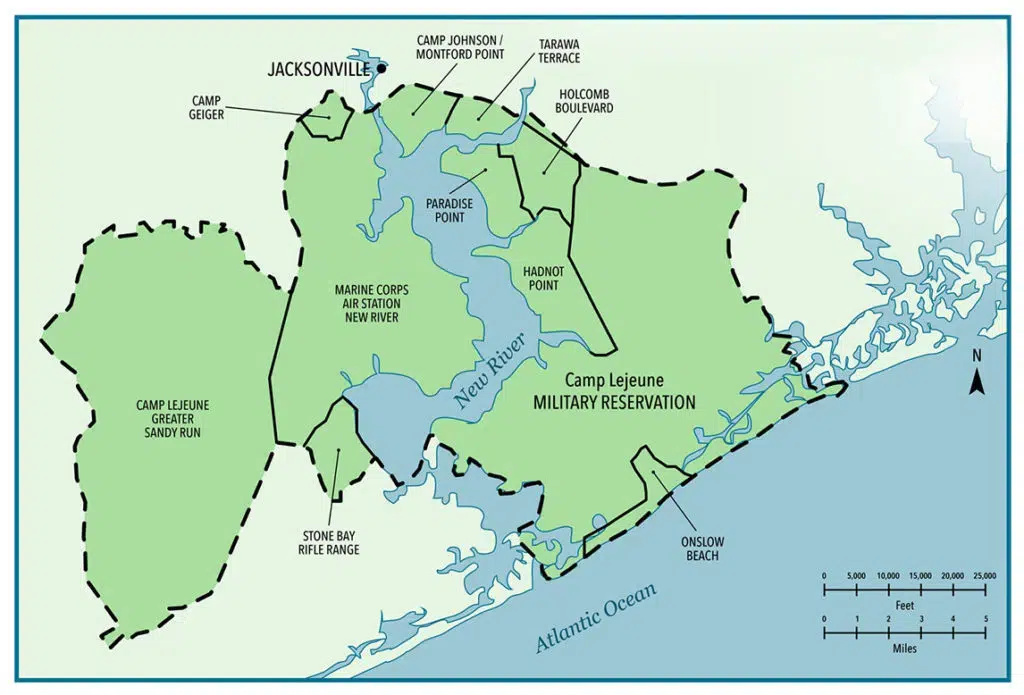
Camp Lejeune opened in 1942 as a Marine base in Jacksonville, North Carolina. In 1982, the Marine Corps discovered volatile organic compounds (VOCs) in drinking water provided by two treatment plants on base, according to the Agency for Toxic Substances and Disease Registry (ATSDR).
The ATSDR believes that exposure to these contaminants from the 1950s to February 1985 caused adverse health effects. In particular, the contamination may have exposed base residents to trichloroethylene (TCE), tetrachloroethylene (PCE), benzene, and vinyl chloride. These substances “likely increased the risk” for certain types of cancers, ATSDR said.
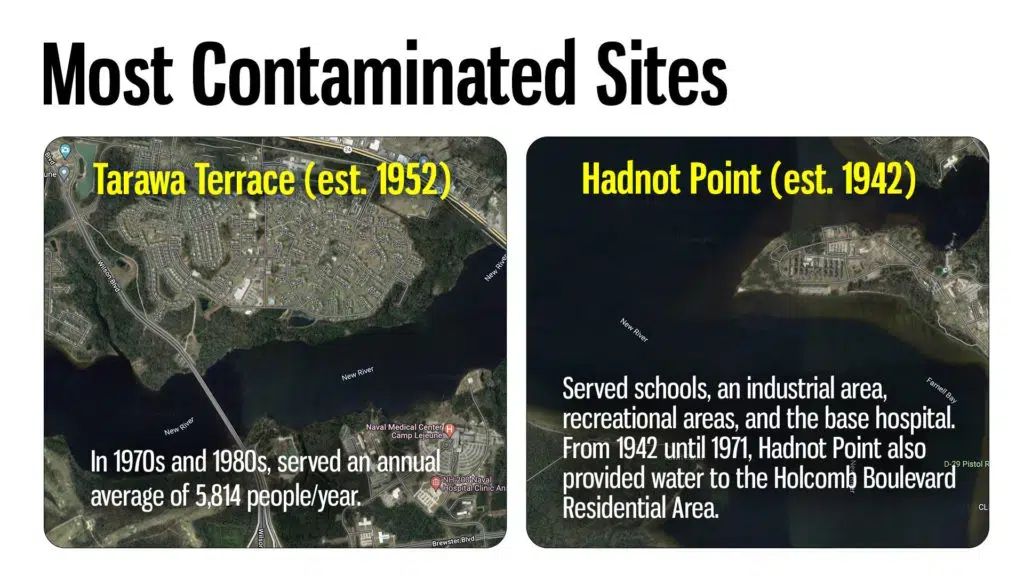
The two treatment plants with contaminated water were Tarawa Terrace and Hadnot Point. The source of contamination at Tarawa Terrace was ABC One-Hour Cleaners, an off-base dry cleaner.
In 1989, Camp Lejeune and the dry cleaners became EPA Superfund sites, according to ATSDR. Various sources, including leaking underground storage tanks, industrial area spills, and waste disposal sites, contaminated the supply wells at Hadnot Point, the ATSDR said.
The ATSDR conducted several studies beginning in the 1990s designed to determine the effects of the contamination, including reproductive studies, water modeling, and mortality studies.
Over one million people lived at Camp Lejeune within this time period: active duty and former military service members, families, non-military staff, and others.
If you, a family member, or a loved one has suffered health effects as a result of the water contamination at Camp Lejeune, you may be eligible to participate in the Camp Lejeune Water Contamination Lawsuit.